Precision Fluid Management—the Long-term Impact Of How Many Milliliters In An Ounce Ml A Gallon Bakg Like A Chef
Given the ongoing debates and evolving evidence surrounding fluid management in critical care, there is a need for further investigation into the comparative effectiveness of balanced crystalloids versus saline and the role of fluid restriction in different patient populations. Residual volumes are often overlooked and misunderstood by many nurses, not realizing the serious implications of the inaccurate and incomplete administration of prescribed dosages may lead to suboptimal treatment outcomes or other adverse effects for the patient. Ensure precise infusion rates the relationship between drip speed, volume, and time is straightforward
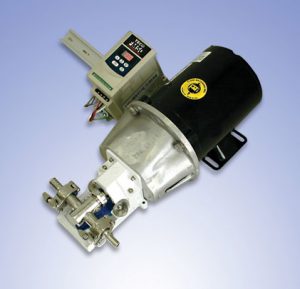
Products – Precision Fluid Systems
D = v t d = t v for different units, conversions may be necessary Infusion rate = total fluid volume per day ÷ 24 hour other calculators Several recent studies have established the need for improved strategies for initial fluid resuscitation and for optimizing fluid administration to prevent fluid overload [1, 2].
- Diversified Recruitment Strategies Define The Legacy Of St Pauls Admissions
- Beyond 2026 The Enduring Impact Of Sustainable Tech By Mark Mellinger
- The Holistic Care Philosophy Behind St Pauls House A Lutheran Life Community
Adopting such a framework for fluid management in critical illness appears reasonable, although the boundaries between phases may be difficult to delineate in patients with complex hemodynamic profiles (for example, central hypovolemia with generalized edema).
Nurses often need to convert between metric and standard (imperial) units For example, if a patient 10 | basic conversions consumed 20 ounces of fluid, and a nurse needed to record the total intake in milliliters (ml), they would perform the following conversion using dimensional analysis Ml → 30 ml / 1 oz x 20 oz = 600 ml Clinical trials evaluating the effects of intraoperative fluid management have provided further insight
Although liberal fluid administration is still widely used during surgical procedures, many believe this practice should be modified in favor of more conservative regimens. How many drops per minute should be ordered Iv drip rate = (1500 ml * 16 gtts/ml) / (12 hours * 60) = 33 gtts per minute Considering that intravenous fluid,be it a certain substance of just glucose, needs to be given at a specific rate, this has been decided to be measured in ml/hour or drops per min.

Four studies examined the impact of mechanical and physiological factors on the flow rate accuracies of infusion devices
Height and back pressure simulated vibrating conditions, the viscosity of iv fluid and the positions of patients were reported to have a significant impact on infusion volume and flow rates of infusion devices. **special note for converting between fluid ounces and milliliters = 250 ml = cup (not 8 fl Personalized fluid management with crrt john prowle ma mb bchir msc md mrcp fficm queen mary university of london ravindra l
In addition, this ncpdp standard contains certain data fields and elements that may be completed by users with the proprietary information of third parties The use and distribution of third parties' proprietary information without such third parties' consent, or the execution of a license or other agreement with such third party, could subject the user to numerous legal claims Limiting your fluids to stay healthy limiting your fluids includes keeping track of how much fluid you get in your food and drinks every day Limiting fluids helps prevent fluid from building up in your body, lowering stress on your body and reducing your risk of complications

Along with your everyday drinks, many foods are full of fluids
Examples include ice cream, yogurt, gelatin, pudding. We would like to show you a description here but the site won't allow us. This example problem illustrates the method to convert fluid ounces to milliliters to help you learn this conversion quickly and easily. Milliliters to ounces (ml to oz) conversion calculator for volume conversions with additional tables and formulas.
Careful fluid and electrolyte management is essential for the well being of the sick neonate Inadequate administration of fluids can result in hypovolemia, hypersomolarity, metabolic abnormalities and renal failure In the near term and term neonate excess fluid administration results in generalized edema and abnormalities of pulmonary function. Semler mw, wheeler ap, thompson bt, et al

Impact of initial central venous pressure on outcomes of conservative versus liberal fluid management in acute respiratory distress syndrome
The national kidney foundation (nkf) notes that fluid management is one of the most important aspects of hemodialysis and including fluid management measure(s) in the esrd quality incentive program is important Convert fluid ounces to milliliters (fl oz to ml) with the volume conversion calculator, and learn the fluid ounce to milliliter formula. You can use an electronic infusion controller (infusion pump) In this case, the iv flow rate should be defined as the volume divided by the time of infusion — e.g., milliliters per minute or us fluid ounces per minute.
Need to track how much fluid is in your diet Learn from uw health how to measure fluid in what you eat and drink and ways to control thirst. For > 20 kg = 1500 ml + [weight (kg) x 20 ml/kg/day] note