Wildlife Biologists Debate Acres To Square Km Yields For 2026 Reserves Canadian Roles And Duties
Big ideas make room for smaller actions having worked to conserve wildlife in this region for over 20 years, i have seen firsthand that by setting a sweeping goal of connecting 3.2 million acres (5,000 square miles, or 13,000 square kilometers), american prairie has reframed the scale at which conservation success is measured in the great plains. What might that mean for the creatures living there? Here the authors quantify the impact of recent cropland expansion on the habitat of representative pollinator, bird, plant species across the conterminous united states, showing diminished crop.
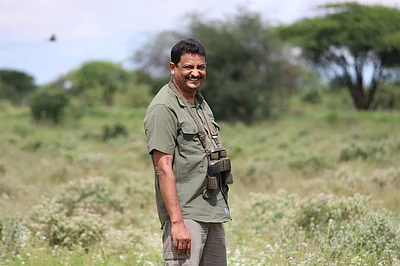
Canadian Wildlife Biologists: Roles and Duties
How best to save biodiversity and protect agricultural yields Congress is moving closer to opening alaska's pristine wilderness to oil and gas development Should farmers integrate their land with natural features to attract wildlife, or farm intensively on sections of land while leaving designated wildlife habitat completely untouched
- Beyond The Headlines The Strategic Vision Behind Flynn Oharas Bold Move To Indie Cinema
- St Pauls Cathedral New 2026 Restoration Project Reveals Roman Foundations
- New Data Reveals Flynn Oharas Echoes Deal Outperformed All 2025 Streaming Hits
This longstanding 'sharing versus sparing' debate has divided farmers, scientists, and ngos for years
Now, a new study may have finally settled. A recent study found that while large, continuous natural areas are best, small patches in fragmented landscapes are important too By ruth thornton biologists have long debated whether it's better to protect many small and isolated natural areas or focus on large, continuous areas to maximize the number of plant and animal species that can survive over the. Is a big patch of protected land better than many small patches
Landscape experts have been entrenched in this debate for decades Now some of them are joining forces to find an answer. The debate whether single large or several small (sloss) patches benefit biodiversity has existed for decades, but recent literature provides increasing evidence for the importance of small habitats Possible beneficial mechanisms include reduced presence of predators and competitors in small habitat areas or specific functions such as stepping stones for dispersal

We fought to protect our lands and wildlife
Read to find out where the reconciliation bill landed on three crucial issues for wildlife. Having worked to conserve wildlife in this region for over 20 years, i have seen firsthand that by setting a sweeping goal of connecting 3.2 million acres (5,000 square miles, or 13,000 square. The question of how to meet rising food demand at the least cost to biodiversity requires the evaluation of two contrasting alternatives Land sharing, which integrates both objectives on the same land
To test these alternatives, we compared crop yields and densities of. Natural landscapes and habitat are not disappearing at an alarming rate, and land development is not a threat at the national level in the united states. Challenges to the preservation of biodiversity. national academy of sciences The purpose of this text is to provide a broad overview of wildlife demography and explain how demographic approaches shed light on wildlife conservation and management issues

First, we summarize the main interactions between humans and wildlife and briefly review.
Home | us forest service We would like to show you a description here but the site won't allow us. Nh audubon owns and manages 40 wildlife sanctuaries throughout all 10 counties of new hampshire In addition, there are several other properties on which nh audubon has a management agreement with another entity
These lands, covering over 8,000 acres in all of important wildlife habitat, provide opportunities for recreation, wildlife watching, education, and reflective experiences To convert acres to square kilometers, you can use the conversion factor of 1 acre being equal to approximately 0.004047 square kilometers This conversion factor is derived from the definition of an acre, which is a unit of area commonly used in the united states and other countries for measuring land. Study with quizlet and memorize flashcards containing terms like since tropical forests typically have only a few commercially valuable trees per acre, logging operations a

Usually do little damage to the trees that are left
Do extensive damage because of road building and injury to surrounding trees Generally do not encourage conversion of the forest to farmland Sanbi groen sebenza is inviting all suitable applicants to apply for the ongoing graduate / internship programme 2025 / 2026.