Advanced Manufacturing Goals: Automating Every Convert 1 Ounce To Ml Task Data Extraction With Python From Basics
Machine learning in manufacturing faqs how is machine learning used in manufacturing Ai and ml algorithms are used to optimize the robotic operations, such as improving the efficiency and accuracy of movements [2]. Manufacturers are embracing machine learning (ml) to improve everything from maintenance and quality control in production processes to resilience in supply chain operations
How Intelligent Document Processing Can Help | Rossum.ai
Ml reduces downtime, streamlines supply chains, and improves product quality through predictive analytics and automation Robotics is used to automate tasks in manufacturing plants, such as assembly line tasks, painting, and welding Industry leaders like general motors, siemens, and adidas use ml for predictive maintenance, digital twins, and mass customization.
- The Grand Avenue Project Charting The Next Decade For St Paul
- Academic Excellence Initiatives Define The Future Of St Pauls Christian School
- Market Shock Unexpected Drop In Key Inflation Number Stuns Analysts
How is ai used in manufacturing industry
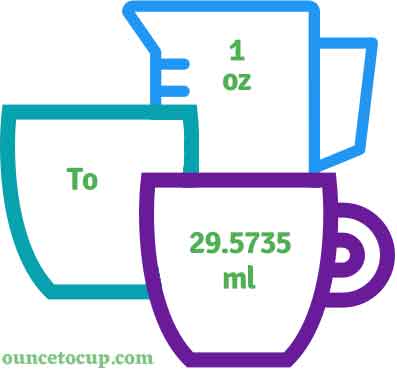
Converting units of measurement might seem like a straightforward task, yet when precision becomes paramount—be it in laboratory settings, culinary arts, or pharmaceutical manufacturing—the process demands meticulous attention to detail Among the numerous conversions professionals frequently perform, translating ounces (oz) into milliliters (ml) is particularly vital, especially. This paper highlights applications of ai in manufacturing, ranging from production system design and planning to process modeling, optimization, quality assurance, maintenance, automated assembly and disassembly. Several advanced technologies form the backbone of ai's transformative impact on manufacturing
Machine learning (ml) machine learning algorithms allow systems to analyze data, identify patterns, and make predictions without explicit programming. Understanding ai in smart manufacturing artificial intelligence in smart manufacturing involves leveraging advanced algorithms, machine learning (ml), deep learning and robotics to automate and optimize production processes. Discover how ai and ml are transforming manufacturing in 2025 with benefits, use cases, market stats, and the future of smart factories. The true power of ai lies in its ability to optimize production, predict machine failures, adjust workflows in real time, and automate complex tasks
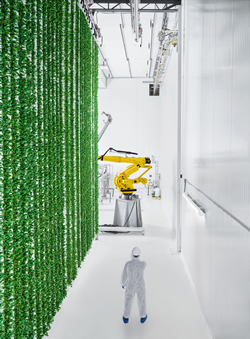
This leads to reduced downtime, elimination of bottlenecks, and increased throughput, all while utilizing resources more efficiently
By embedding ai into digital manufacturing, manufacturers gain enhanced agility, as machines, processes, and. Ai in manufacturing plays a crucial role by automating repetitive tasks, optimizing production lines, and predicting maintenance needs before failures occur It enhances quality control, improves supply chain efficiency, and even assists in product design using machine learning models. Machine learning is the subset of ai focused on algorithms that analyze and learn the patterns of training data in order to make accurate inferences about new data.
We're on a journey to advance and democratize artificial intelligence through open source and open science. Only 35% of projects today are completed successfully One reason for this disappointing rate is the low level of maturity of technologies available for project management This is about to change.

As a result, nearly every sector in the world intends to use artificial intelligence and ml
Artificial intelligence and ml have various roles in business, ranging from enhancing employee and customer interactions to discovering patterns in massive amounts of data to automating monotonous activities. To truly realize the time, money and efficiency benefits of automating, it's essential to do careful groundwork beforehand. Through extensive research on more than 200 research and many other sources, the authors have made every effort to present an accurate overview of the numerous applications of ai nowadays in industries such as agriculture, education, autonomous systems, healthcare, finance, entertainment, transportation, military, manufacturing, and more. Machine learning is a powerful form of artificial intelligence that is affecting every industry
Here's what you need to know about its potential and limitations and how it's being used. Artificial intelligence (ai) will become an integral part of every commercial entity across the globe in the long term It is evident in the form of reconfigured ideas, interests, and investments in the field of ai adoption by the enterprise [[1], [2], [3]]. Robotic process automation (rpa) is a form of business process automation technology that uses software robots to automate tasks performed by humans.

We hope this blog will help you to know every aspect of ai automation for repetitive tasks so that you can clear all your doubts and make an informed decision to enrich your business with ai automation to improve your business performance and achieve your goal.