
Cosmetic Chemists Explain The Formulas Using Data On How Many Mils In 1 Ounce Material Tips Vs Millimeters Ed Graphics Output
Introduction in the world of cosmetics formulation, precision is paramount At 1000 meters 1 mil is 1 meter tall. Whether you're creating your own skincare products or working as a professional cosmetic chemist, understanding how to calculate and work with percentages is a fundamental skill
Mm To Mils Calculator - Calculator Academy
Accurate measurements ensure your cosmetics are effective, safe, and consistent. It doesn't matter what unit of measurement you are using as long as you keep using that unit of measurement Ingredient percentage = (ingredient weight (how much you use) / total formulation weight) x 100 for instance, if you want to use an ingredient at 5g in a 50g formulation
- The Shocking Truth Behind St Pauls Admissions 2026 Sees Record International Surge
- Altar Designs Revolutionized 2026 Trends Embrace Sustainable Materials
- The Unseen Twist How Orphan First Kill Changed Its Original Ending
Ingredient percentage = (5g / 50g) x 100 = 10% of ingredient used in the formulation.
This book, general advice and formula and methods contained within has been developed and written by a qualified cosmetic chemist Costs associated with producing a sample of any of these formulas is the user's responsibility including any reworks or fails Ipcs recommends a 100g lab scale sample be made and pilot production prior to full scale production. This is a handy guide to converting your cosmetic formuation or skincare recipe from volume measurements (spoons and cups) to metric weight measurements
This will ensure accuracy in all your natural cosmetic formulations! Basic principles of cosmetic formulas we have put together basic concepts of formulas and methods for making personal care products and color cosmetics The ingredients are indicated as functional categories only and the percentages reflect ranges that are typically used. Professional cosmetic formulas are written in percentages
So how do you convert a formula written in percentages into a weight based recipe you can make
Converting a formula into a 100g test batch size how to calculate different batch sizes The examples used are for a simple skincare product, however the same calculations apply to any type of cosmetic product such. Dilution chart amount of essential oil added to 1 fluid ounce (approx 600 drops) of carrier oil to achieve each dilution
1% dilution = 6 drops 2% dilution = 12 drops 2.5% dilution = 15 drops 5% dilution = 30 drops or 1.5 ml 10% dilution = 60 drops or 3 ml or, for smaller amounts The number of drops you add to one measuring teaspoon (5 ml) of carrier tells the % dilution Gain insights into cosmetic formulation for your business Understand science, key components & trends to stand out in the industry.

Calculating and using %w/w percentage weight concentrations in cosmetics formulas
Find the formula and examples here Our free calculator tells you the costs of the ingredients in your formula and converts percentages to grams and ounces For our other calculator which creates a cream, lotion, moisturizer recipe for your skin type click here For details on how to make a body cream, click here for a tutorial.
There are thousands of different cosmetic products on the market, all with differing combinations of ingredients. The components are often written as a ratio or as a percentage and can be used to predict the dry film thickness (dft) when the wet film thickness (wft) is known. Coatings contractors use the term mils multiple times per day on the job But what exactly does the word mils mean

How do contractors determine the proper mils to apply to a substrate
Read on to find out the answers to these questions and more. Formulate with confidence using lotioncrafter's calculators Convert between percentages and weights to scale skincare, makeup, and body care recipes. A mil or an moa linear equivalent increases proportionally with distance
With the moa and mil systems, you correct the position of the reticle inside the scope, based on wind deflection and trajectory of the bullet at the target's distance. (0.65 ÷ 1.20) = 0.54, or 54% adjusted volume solids based on 20% thinner addition step 2 Most bag bans regulate the thickness of bag materials in mils Learn more at 1 bag at a time & which bags can be classified as a reusable bag under the law.
To be a cosmetic chemist you have to learn to make cosmetic formulas
For most people starting out in the cosmetic industry, you'll specialize in a specific type of formulation such as skin, hair, or color cosmetics However, to be a complete cosmetic chemist you should have an understanding of how all cosmetics work and are formulated. The latter amount is most convenient and would simply involve the use of molar masses instead of atomic and formula masses, as demonstrated example 2 As long as we know the chemical formula of the substance in question, we can easily derive percent composition from the formula mass or molar mass.
Formulas, conversions and equations for wet film thickness, dry film thickness & coverage of coatings easily convert and calculate the wet and dry film thickness and coverage of coatings applied to a substrate Percentage of solids by volume in a coating will usually be known Check the instructions for use of the coating or the 'material safety data sheet' (msds) Mil scale in the u.s., we use an imperial unit of measure called mil to measure the thickness of coatings

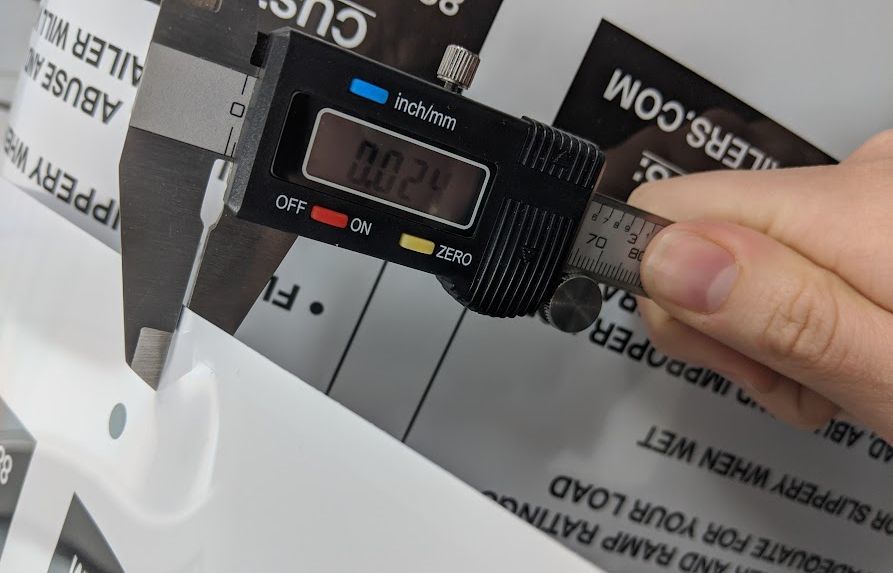
One mil is equivalent to 1 thousandth of an inch (or 25.4 microns), but that's not the easiest thing to visualize.
To read more about this, join the making skincare grou p and look out for the graphs and data provided by the chemists, mirta, tammy and martin in this post and this post. This broad definition includes any material intended for use as an ingredient of a cosmetic product, with the fda specifically excluding pure soap from this category Figure 21 6 1 assorted cosmetics and tools Cosmetics (figure 21 6 1) have been in use for thousands of years
Egyptian men and women used makeup to enhance their appearance. Therefore, 1 mil is always 1/1,000th of whatever distance Therefore, 1 milliradian equals 1/1000th of any distance One mil is 1 inch at 1000 inches and it is also 1 mile at 1000 miles